
Expedition Cruises vs. Traditional Luxury Cruises

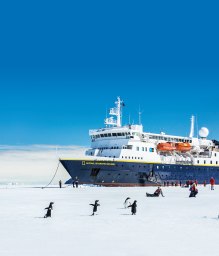
I get asked this question more than almost any other: What’s the real difference between an expedition cruise and a traditional luxury cruise, and which one is right for me?
After traveling to 50+ countries and booking both types for clients across every budget and travel style, my answer is always the same: it depends entirely on what you want the trip to do for you.
Quick answer: Expedition cruises put the destination first. Small ships, remote wilderness, daily landings, and onboard naturalists who help you understand what you’re seeing. Traditional luxury cruises put the onboard experience first. Refined dining, spacious suites, entertainment, and established ports as the backdrop.
Neither is universally better. The right choice depends on whether you care more about reaching a rare destination or enjoying the ship itself.
Here’s the question I always ask clients before we go any further: Is the destination the reason for the trip, or is it just the setting?
If you’re drawn to Antarctica or the Galápagos because nowhere else would do, expedition cruising is almost certainly your answer. If the cruise experience itself is the draw and multiple itineraries would satisfy you, a traditional luxury cruise delivers that better.
What Is an Expedition Cruise?
Best for: Travelers who want wildlife, remote access, and an active itinerary built around a specific destination.

An expedition cruise is a small-ship voyage designed to reach remote wilderness destinations that larger vessels simply cannot access. Ships carry between 50 and 200 passengers, are purpose-built with ice-strengthened hulls for polar regions, and use Zodiac inflatable boats to land guests directly on shores, ice floes, or uninhabited islands where no dock exists.
The defining feature is what happens off the ship. Each day typically includes one or two guided shore landings of two to three hours each, led by onboard naturalists, marine biologists, ornithologists, or historians depending on the destination. Evenings include expert recap lectures that contextualize everything you saw that day. It’s genuinely one of the most educational travel formats I’ve ever experienced.
What expedition cruising is NOT
Expedition cruising is not roughing it. Modern expedition ships from lines like Lindblad Expeditions, Silversea Expeditions, Ponant, and Seabourn Expeditions off
er comfortable to genuinely luxurious accommodations, quality dining, and well-stocked bars. The amenities support the expedition. They are not the point of the trip.
- Ship size: 50 to 200 passengers
- Destinations: Antarctica, the Arctic, Galápagos, Svalbard, Papua New Guinea, the Amazon, and remote Pacific islands
- Shore access: Zodiac landings, kayaks, or submersibles rather than port gangways
- Daily pace: Structured and active, with early mornings built around wildlife and weather
- Expert team: Naturalists, scientists, and historians included in the fare
- Physical demand: Moderate; landings require stepping in and out of Zodiacs and walking on uneven terrain
What Is a Traditional Luxury Cruise?
Best for: Travelers who want comfort, variety, and a relaxed, self-directed pace with the ship as a central part of the experience.
A traditional luxury cruise is an ocean voyage where the ship itself is a highlight. These vessels range from mid-size ships carrying 600 to 1,200 passengers (think Oceania Cruises or Explora Journeys) to intimate ultra-luxury ships in all-suite configurations, such as Regent Seven Seas, Crystal Cruises, and Silversea’s ocean fleet.
The focus is on the onboard product: multiple specialty restaurants, full-service spas, enrichment lectures, and a high staff-to-guest ratio that delivers genuinely attentive service. Destinations serve as the backdrop. Ports are typically well-established cities and coastal towns with existing infrastructure.
At the luxury tier, the differences from mainstream cruising are real and meaningful:
- Ship size: 300 to 1,200 passengers at the luxury tier
- Destinations: Mediterranean, Caribbean, Norwegian fjords, Alaska, Scandinavia, Asia, the British Isles
- Shore access: Standard gangways; guests walk off in established port cities
- Daily pace: Flexible and self-directed; port days are one element among many
- Enrichment: Guest lecturers and entertainment included; excursions are optional
- Physical demand: Low to moderate; everything is optional
Cabins are typically all-suite or veranda-only. Dining is included and genuinely restaurant-quality across multiple specialty venues. At the higher end, gratuities, premium beverages, and shore excursions are bundled into the fare.
Destinations: Where Each Type of Cruise Actually Goes
This is where the two cruise types diverge most sharply. The destinations a
ccessible to each are almost entirely different categories of place.
The single most useful frame I give clients: On an expedition cruise, you’re going somewhere specific becau
se only that place will do. On a traditional luxury cruise, you’re having an experience that happens to visit several places.
Where expedition cruises go
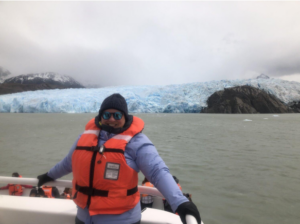
Expedition cruises reach destinations that have no hotels, no roads, and no commercial infrastructure. The only way to experience them meaningfully is by small ship:
- Antarctica and South Georgia: Penguin colonies in the millions, leopard seals, icebergs the size of city blocks, and a silence so complete it stops you mid-sentence. This is the one destination I recommend to every serious traveler.
- The Arctic (Svalbard, Greenland, Franz Josef Land): Polar bears on sea ice, walrus haul-outs, and the midnight sun. Svalbard sits at 78° North and is genuinely one of the most extraordinary places I’ve ever stood.
- The Galápagos Islands: Marine iguanas, blue-footed boobies, and giant tortoises in habitats essentially unchanged since Darwin. The wildlife has no fear of humans, which means encounters are unlike anything else on earth.
- Remote Pacific and Indian Ocean islands: Raja Ampat, the Kimberley coast of Australia, the outer Seychelles.
- The Amazon and Mekong rivers: Riverine ecosystems accessible only by small vessel.
Access to these destinations is controlled, group sizes are limited, and the experience is structured around environmental protection. That’s exactly what makes it so extraordinary.
Where traditional luxury cruises go
 Traditional luxury cruises visit places that are genuinely beautiful and worth your time, but they’re places with existing infrastructure: airports, port facilities, restaurants, and cultural attractions you can explore independently.
The Mediterranean, Caribbean, Norwegian fjords, Alaska’s Inside Passage, the Baltic capitals, the British Isles, Japan, and Southeast Asia all fall into this category. The port experience is flexible. You can take an organized excursion, hire a private guide, or simply walk off the ship and explore on your own.
The honest difference: Expedition destinations are irreplaceable. Traditional luxury cruise destinations are often also accessible by other means: flights, land tours, river cruises. That’s not a criticism. It’s simply a different value proposition, and both are extraordinary in their own way.
Wildlife and the Expert Team Onboard
One of the most underappreciated differences between these two cruise types is the caliber and role of the onboard expert team. It genuinely changes the experience.
On an Antarctic voyage, you’ll walk among thousands of penguins at close range, watch humpback whales surface from a Zodiac, and photograph leopard seals resting on ice floes. In the Galápagos, a blue-footed booby may land near your feet and a sea lion may swim alongside your kayak. These encounters are genuine and unscripted. If a pod of orcas appears off the bow at 6 a.m., the captain slows the ship and your naturalists are on deck explaining what you’re seeing. That’s just Tuesday on an expedition cruise.
The expedition expert team
Every expedition voyage includes a team of specialists whose sole job is to help you understand and experience the destination:
- Naturalists and wildlife biologists who lead shore landings and identify species
- Marine biologists on ocean and polar voyages
- Ornithologists on bird-rich itineraries like the Falklands or South Georgia
- Glaciologists and geologists on polar voyages
- Photography instructors on lines like Lindblad Expeditions, which operates in partnership with National Geographic
These experts give evening recaps, lead morning briefings, and are available throughout the day. Travelers who want to come home genuinely knowing more about what they saw will find expedition cruising delivers this in a way traditional cruising simply isn’t designed to.
Traditional luxury cruises offer excursions at every port, ranging from city tours and museum visits to wine tastings and private villa access. Wildlife encounters exist on traditional itineraries but are more limited: a Mediterranean cruise might include a dolphin-watching boat trip; an Alaska itinerary might include whale watching. These are scheduled activities, not the organizing principle of the voyage.
The key structural difference: On an expedition cruise, every day is built around what you do off the ship. On a traditional luxury cruise, every day is built around the ship’s schedule, with port time as one element of many.
Dining, Accommodations, and Onboard Experience
The dining gap between expedition and traditional luxury cruises has narrowed significantly in recent years, but real differences remain.
Dining
Expedition cruise dining typically centers on one main dining room with a single seating, occasionally supplemented by a casual café or outdoor grill. The food is very good, with an emphasis on fresh provisions where possible. Luxury expedition lines have elevated this considerably: Ponant’s French culinary program brings genuine restaurant-quality cooking to polar waters, and Silversea Expeditions and Seabourn Expeditions both offer impressive dining for ships their size. But you won’t find six specialty restaurants, a sushi bar, and a steakhouse on a 100-passenger expedition vessel.
Traditional luxury cruise dining is a genuine highlight at the top tier. Multiple specialty restaurants, open-seating schedules, and broad menus are standard. Lines like Regent Seven Seas include all specialty dining in the fare. The food and wine programs on the best traditional luxury ships are genuinely impressive and a meaningful part of the overall experience.
Accommodations
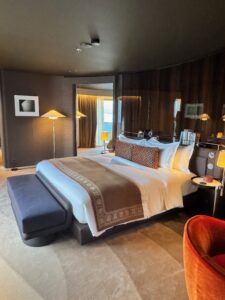
This is where traditional luxury cruises hold a clear advantage at the top end.
Expedition cabins range from functional (porthole cabin with two single beds) to genuinely luxurious (full suites with private balconies on ships
like the Seabourn Venture or Silversea Silver Cloud Expedition). Expect comfortable, well-designed spaces with quality bedding and good bathrooms, but less square footage than a comparable traditional luxury ship.
Traditional luxury cruise suites at the ultra-luxury tier are genuinely hotel-comparable. Marble bathrooms, separate living areas, private verandas, butler service, and walk-in closets are standard on the top lines.
The bottom line on accommodations: If you’re spending 80% of your time off the ship anyway, a comfortable cabin is sufficient. If the cabin is a significant part of what you’re paying for, traditional luxury cruising delivers more.
Service
Both cruise types deliver high standards, but the character differs. Expedition cruise service is warm, personal, and informal. Staff know guests by name within the first day. It feels more like a small boutique hotel than a five-star resort, and I mean that as a compliment. Traditional luxury cruise service is polished and attentive, modeled on the best hotel standards, with butler service and anticipatory hospitality as hallmarks of the top lines.
How Much Do These Cruises Cost? (2025–2026 Pricing)
Pricing is where I see the most confusion, because the two categories overlap more than most travelers expect at the upper end. The pricing also fluctuates with early booking and catching great promotions, such as the wave season in January and February, being a great way to save money.
Expedition cruise pricing
Expedition cruises are generally priced higher than traditional cruises of comparable length. Smaller ships spread fixed costs across fewer passengers, remote destinations require permits and specialized equipment, and expert staff teams are a significant operating cost.
For a 10 to 14-day polar expedition in 2025-2026, here’s what I’m seeing:
- Lindblad Expeditions: From approximately $10,000 per person for Antarctica
- Quark Expeditions: From approximately $10,000 per person for the North or South Pole regions
- Silversea Expeditions: From approximately $12,000 per person
- Ponant: From approximately $14,000 per person
- Seabourn Expeditions: From approximately $14,000 per person
- North Pole icebreaker voyages: $38,000 to $45,000 and above per person
Non-polar destinations are more accessible. Galápagos expedition cruises typically start around $5,000 to $8,000 per person for a week-long voyage.
Traditional luxury cruise pricing
Traditional luxury cruise pricing spans a wide range depending on line, itinerary, cabin category, and inclusions:
- Mid-luxury tier (Oceania, Explora Journeys): $3,500 to $8,000 per person for a 10-day voyage
- Ultra-luxury all-inclusive (Regent Seven Seas): $8,000 to $22,000 per person
- Ultra-luxury suites (Silversea ocean ships, Crystal): $10,000 to $35,000 and above
What’s actually included: the real comparison
A headline fare comparison is almost meaningless without looking at inclusions. This is critical.
Expedition cruises at the luxury tier typically include all shore excursions and Zodiac landings, the onboard expert team and all lectures, all meals and beverages, expedition gear including rubber boots and often parkas, and gratuities.
Traditional luxury cruise inclusions vary by line. All-inclusive lines like Regent Seven Seas include shore excursions, beverages, gratuities, and specialty dining. Other lines include meals and some beverages, with excursions and specialty dining as add-ons.
My advice: A Regent Seven Seas voyage at $15,000 per person may include everything. An expedition cruise at the same price may also include everything. The comparison requires looking at what’s bundled, not just the headline fare. This is exactly where working with a luxury cruise specialist saves you real money.
How to Decide: Five Questions That Point to the Right Answer
If you’re still uncertain after reading this far, these five questions will clarify your thinking quickly.
1. Is there a specific destination you’ve always wanted to reach? If that destination is Antarctica, the Galápagos, Svalbard, or any remote wilderness with no hotels or roads, stop here: expedition cruise. No traditional luxury ship will get you there. If your dream destination is the Amalfi Coast, the Greek islands, or Japan, a traditional luxury cruise covers it beautifully and gives you a better onboard experience while doing so.
2. How do you feel about structured days with early mornings? Expedition cruises run on the wildlife’s schedule. Briefings at 7 a.m., Zodiac boarding by 8, landings in all weather. If that sounds like exactly what you want, expedition cruising is built for you. If it sounds exhausting, traditional luxury cruising puts you in control of your own day.
3. Is the onboard experience a significant part of what you’re paying for? If world-class dining across multiple restaurants, a full spa, entertainment, and an elegant social atmosphere matter deeply to you, traditional luxury cruising delivers far more. If those things are pleasant but secondary to what you’ll see and do, expedition cruising is the better investment of the same dollars.
4. How important is predictability? Expedition itineraries change. Weather moves landings. Captains follow wildlife. That flexibility is part of the appeal for the right traveler, and a genuine source of stress for the wrong one. Traditional luxury cruises follow a fixed schedule. If certainty matters to you, weight this heavily.
5. Are you traveling with others who have different priorities? Mixed groups with varying activity levels or interests almost always do better on traditional luxury cruises, where there’s enough variety that everyone finds their version of the trip. Groups with a shared passion for wildlife and exploration are the ideal expedition audience.
The middle ground worth knowing about
A third category exists that sits between the two: small-ship luxury cruising. Lines like Aqua Expeditions, Sea Cloud, and the Ritz-Carlton Yacht Collection operate vessels of 100 to 400 passengers with a genuine destination focus, more refined onboard products than a typical expedition ship, and itineraries that reach less-visited ports without the full expedition structure. For travelers who want something between the two, this category is genuinely worth exploring.
The Bottom Line
Both cruise types reward travelers who choose them deliberately. The ones who are disappointed are almost always the ones who chose based on price alone, a friend’s recommendation, or a vague sense that “luxury cruising” would be good. It usually is. But the right version depends entirely on what you actually want from the trip.
Many experienced travelers find they want both at different points in their travel life, and there’s no reason to choose permanently. I have clients who do an expedition voyage one year and a Mediterranean luxury cruise the next. They’re not the same experience. That’s the point.
If you’ve read this far and still aren’t sure, that’s actually useful information. It likely means the decision hinges on details specific to your trip: timing, travel companions, physical considerations, or a destination you’re weighing against others. That’s exactly the kind of conversation I love having.
I’ve personally traveled to 50+ countries and booked both expedition and traditional luxury cruises for clients across every travel style and budget. The distinctions between lines within each category, the timing of specific destinations, and the inclusions picture are genuinely complex. Don’t leave it to chance.
Reach out to me at TopFlight Travels and let’s figure out exactly which experience is right for you.